

What are grafts?
Grafts are small units of hair that have their own blood supply. These units can contain from one to four hairs. So when a clinic quotes “4,000 grafts”, it does not automatically mean that the patient will get high-density hair.
Hair thickness, wave or curl pattern and the contrast between scalp and hair affect how full the final result looks, which makes the number of grafts a poor indicator of success in a hair transplant.
Can pursuing a high graft count lead to adverse consequences?
Yes, it can. Although a high number of grafts may seem attractive, a high graft count without a diagnosis can cause the same problems that arise when the plan ignores the diagnosis.
One such problem is that a clinic may over-harvest the donor area in order to reach a large number of grafts. The result can be an almost completely depleted donor zone, creating a see-through appearance in the donor area or even an unnatural hairline. In addition, the patient's potential for future restoration is reduced because of donor area limitations.
Possible risks include:
• permanent thinning in the donor zone
• Unusual density and poor placement angles
• Shock loss in the remaining hair
• reduced donor availability for future hair loss treatments

What Does Correct Diagnosis Mean in Hair Restoration?
What Does Correct Diagnosis Involve?
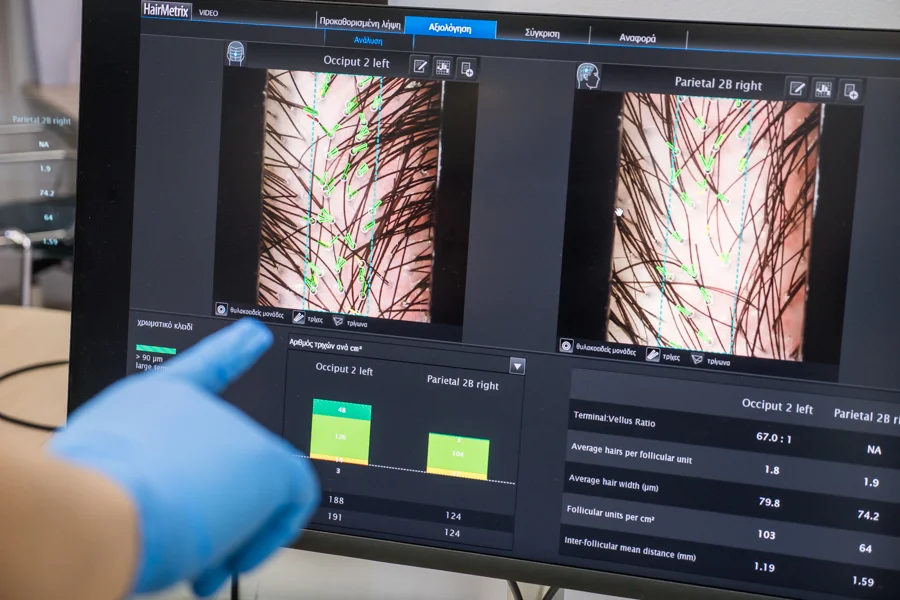
A correct diagnosis includes determining the extent and rate of hair loss, as well as the condition of the donor area. In addition, the doctor should assess the scalp for inflammation, scarring or active shedding that may affect graft survival.
In short, a correct diagnosis answers the key question of whether surgery is appropriate at this point in time.
Which Types of Hair Loss Can Change Transplant Plans?
Many patients believe all hair loss is caused by male pattern baldness. However, there are several types of hair loss and each requires a specific approach.
An accurate assessment can determine whether hair loss is due to:
• androgenetic alopecia or male pattern baldness
• a diffuse thinning pattern
• telogen effluvium and stress related shedding
• traction alopecia
• an inflammatory or scarring condition affecting the scalp
Why is Diagnosis More Important Than Graft Number?
Diagnosis dictates the overall plan. First, it establishes whether medical treatment should precede surgery. Second, it affects the design and density strategy of the hairline. Third, it forecasts future hair loss, thereby enabling a natural appearance for longer.
A diagnosis led plan allows you to:
• determine whether you are a suitable candidate
• preserve your donor area
• anticipate your future hair loss
• avoid costly surgical correction for an ill planned procedure
Why is the Donor Zone Your "Bank Account"?
Why is the Donor Zone Important?
Your donor zone is your permanent resource for funding your hair restoration. Once spent, it can never be replaced. Thus, diagnosis must confirm the stability of your donor zone prior to extracting grafts from the donor area.
What Makes a Donor Zone Strong or Weak?
A strong donor zone has dense hair, thick hair shafts and little or no miniaturisation.
A weak donor zone shows thinning or miniaturisation in the areas considered “safe zones”.
The same number of grafts can therefore mean safety for one patient and risk for another.
A proper assessment of the donor zone will examine:
• The density of the donor zone and the thickness of the hair shafts
• Miniaturisation in the donor zone
• The stability of the pattern and family history
• Previous procedures and possible depletion of the donor area
How Does Diagnosis Protect Your Future Donor Zone Availability?
Diagnosis will prevent your surgeon from harvesting grafts from unstable hair and will help your surgeon avoid donor zone depletion. Therefore, your donor zone will remain healthy, and you will maintain viable future hair restoration options.

Why Do Hairline Design and Density Strategy Trump Graft Numbers?
What determines a natural looking hairline?
A natural result is determined by the design and placement of the grafts, not by excessive emphasis on their number. An experienced surgeon will design a hairline that suits your facial features, your age and the risk of further hair loss, and will then place the grafts at the correct angle and direction to mimic natural hair growth.
Important elements include:
• placement of single hair grafts along the front edge of the hairline
• creation of gradual density behind the hairline
• placement of grafts at the correct angle, direction and spacing
• design of realistic temples and transition zones
Are there cases where a smaller number of grafts will produce a better result?
Some patients may need fewer grafts to achieve a better result, because the surgeon placed the grafts where they would provide the greatest aesthetic value. Early recession often requires strategic frontal placement rather than just general coverage. Similarly, thicker or curly hair can create a fuller result with fewer grafts.
Some examples include:
• thicker hair or curls can produce a fuller result with fewer grafts
• Low contrast between scalp and hair
• Limited early recession
• a focus on creating a natural hairline above all else
Scenarios Where Diagnosis May Save the Patient
What Happens When Diffuse Thinning is Mistaken for Male Pattern Baldness?
While diffuse thinning may resemble typical recession, the risk associated with diffuse thinning is greater because the donor zone may also thin. Over harvesting the donor area to meet the larger number of grafts desired may result in the donor area becoming almost completely depleted, leaving the transplanted area appearing patchy and nearly impossible to repair.
Why Should Treatment for Inflammation or Active Shedding Occur Prior to Surgery?
Active shedding or inflammation can reduce the graft survival rate and prolong the recovery period. Many patients therefore benefit significantly from stabilising the scalp before having a hair transplant.
Why Do Young Men Require Diagnosis Led Planning?
Younger men tend to experience more hair loss following surgery than older men. Therefore, an overly aggressive design of a low hairline can ultimately appear unnatural. In general, a conservative design and staged plan will age more naturally.
Clinique de Monsieur's Approach to Diagnosis and Planning
What Should a Proper Consultation Include?
A consultation with a qualified physician should feel like a medical appointment and not a sales pitch. At Clinique de Monsieur, our doctor led approach is focused on diagnosis first, then planning.
A quality consultation will generally include:
• a detailed history and progression timeline
• a thorough examination of the scalp and donor zone
• an assessment of miniaturization and donor zone stability
• achievable goals and a long term plan
Where Does Direct FUE Fit into This Process?
After diagnosis, the choice of technique becomes particularly important. FUE allows precise extraction and controlled placement of grafts, making it easier to manage angle and direction for a more natural appearance. Direct FUE also promotes careful management of the donor zone, which is critical for long-term planning.
Questions to Ask Before You Agree to a Graft Quote
What Questions Will Protect You From a Poor Plan?
Ask:
• What is my diagnosis, and what evidence supports this diagnosis?
• Is my donor zone stable, and how will this be measured?
• What results can I reasonably anticipate based on my hair characteristics?
• What happens if I experience additional hair loss after surgery?
• Will you take steps to avoid over harvesting and protect my donor zone?
• Why is this graft number required for my particular situation?
Conclusion
The number of grafts quoted may seem impressive, but a correct diagnosis is the only factor that will determine whether the transplant will deliver a natural result, heal properly and continue to look aesthetically balanced as the patient gets older.
A diagnosis-led plan will protect the donor zone, limit unnecessary mistakes and ensure the best possible long-term result.
If you would like a medical assessment and a personalised plan using the Direct FUE method, contact Clinique de Monsieur to confirm your diagnosis and develop the safest possible strategy for your hairline, the availability of your donor zone and the future progression of your hair loss.