

Introduction
When does new hair grow after a hair transplant? This is one of the first and perhaps most important questions that patients ask before deciding on a solution like Direct FUE.
At Clinique de Monsieur, we understand that you are not just looking for a procedure: you want to feel confident, achieve a natural result and know what to expect. However, hair restoration is a process, not an instant change.
So what really happens after a Direct FUE hair transplant? When can you see results, and what can you expect at each stage? In this article, we break down the timeline and the science behind it, step by step.
Understanding the Hair Growth Cycle After a Direct FUE Hair Transplant
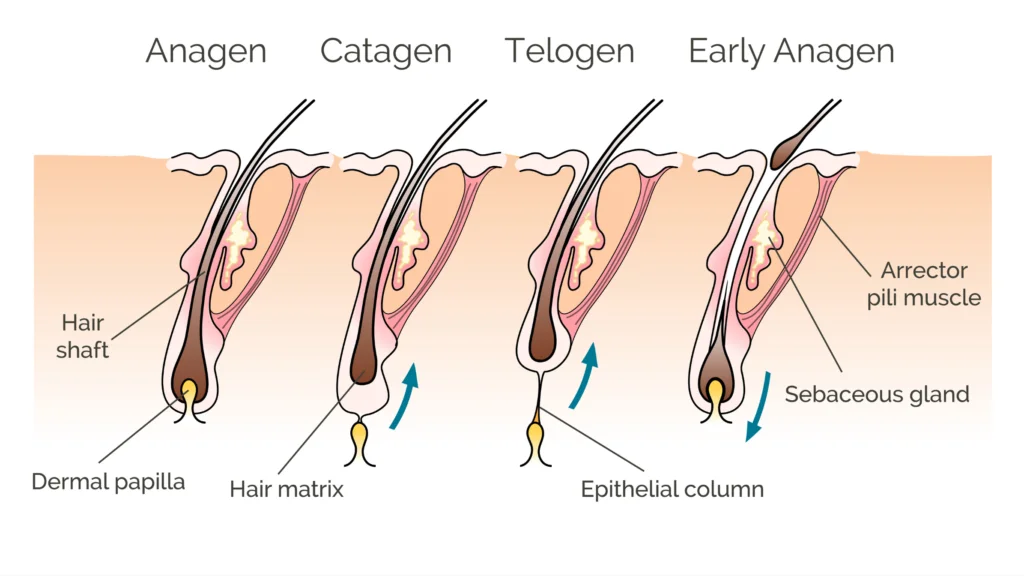
What is the Natural Hair Growth Cycle?
First, to determine when new hair begins to grow, we need to understand how hair grows naturally.
Hair grows through three stages:
- Growth phase: the hair grows actively for many years
- Transition phase: growth slows down and the follicle shrinks
- Resting phase: the hair falls out to make room for new growth
For more scientific insight into the hair cycle, you can refer to the American Academy of Dermatology.
How Does Direct FUE Affect the Natural Hair Growth Cycle?
After a Direct FUE hair transplant, the implanted follicles go into temporary dormancy. Consequently, the newly transplanted hair usually falls out within the first week or two after the surgery.
Does this mean the procedure has failed? Not at all. On the contrary, it is a necessary stage for the growth of new, healthier hair.
When Does New Hair Start Growing After Direct FUE?
What Happens Immediately After the Procedure?
During the first 1 to 2 weeks after the procedure, the scalp heals. At this stage, you will probably notice:
- Small scabs forming at the implantation sites
- Mild redness, mainly in more sensitive areas
- Sensitivity, especially in the transplanted areas
Then, between 2 and 4 weeks, the shedding phase begins. Although it may cause concern, it is completely normal.
Why Do the Transplanted Hairs Fall Out First?
You may ask yourself why the hairs fall out before growing back.
The reason is that the follicles restart their cycle. The hair shaft falls out, but the root remains alive beneath the skin. This phase therefore prepares the ground for new growth.
When Does New Hair Start Growing?
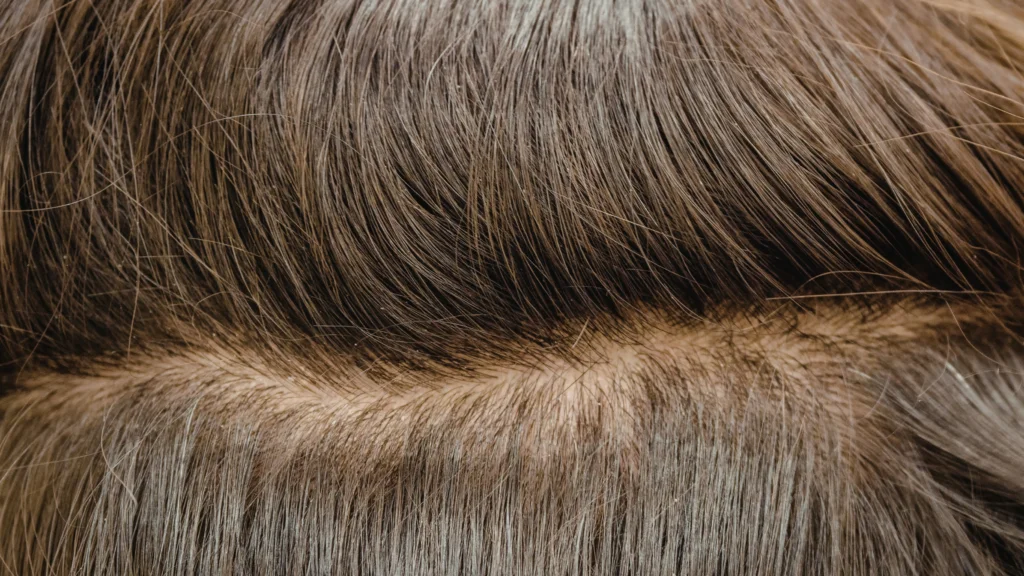
Generally, new hair starts to grow approximately three to four months after the procedure. Initially, the hair is:
- Fine compared to your natural hair
- Softer in texture
- Uneven in distribution
This is only the beginning.
How Does Hair Growth Evolve Over Time?
As you approach five to six months, the hair becomes thicker and more visible. Between nine and twelve months, density increases significantly.
Finally, at twelve to eighteen months, you enjoy the full, natural result.
For more information on transplant results, you can visit the International Society of Hair Restoration Surgery.
What Makes Direct FUE Unique?
What is Different About Direct FUE vs Other Methods?
What makes Direct FUE unique compared to other techniques is that it is a one-stage procedure. Unlike traditional methods, the grafts are placed directly using the Choi implanter, with no separate stages required.
Why is this so beneficial?
- It limits the amount of time the grafts spend outside of the scalp
- It reduces stress on the skin tissue
- It maintains follicular health
Does the Technique Affect the Growth Result?
Yes. Because the follicles remain in better condition, they recover faster. As a result, patients often notice:
- Faster recovery
- A higher graft survival rate
- More natural and even growth
Which Factors Affect Hair Growth?
Why Does the Timeline Differ From Person to Person?
Hair growth is not the same for everyone. Which factors cause the difference in timeline?
Important Factors That Affect the Result
- Genetic factors that determine the rate of growth
- Age, as younger patients often recover faster
- Health and lifestyle, which affect growth
- Scalp condition, with good blood flow supporting follicle function
- The doctor's expertise, which affects quality and density
At Clinique de Monsieur, we assess all of these factors for personalised, reliable results.
How Can You Support Hair Growth?
What Should I Do After My Procedure?
Although the process takes time, you can help improve your results.
Post-Operative Care Instructions
- Follow your doctor's instructions carefully
- Maintain a clean and protected scalp
- Avoid contact with the grafts
What Role Does Nutrition Play?
Nutrition supports hair growth. Focus on:
- High quality protein
- Vitamins such as Biotin and Vitamin D
- Minerals such as iron and zinc
What Should I Avoid?
To protect your result, avoid:
- Smoking
- Excessive alcohol consumption
- Sun exposure
- Intense physical activity
Conclusion
So when does new hair start growing after a Direct FUE transplant?
In most cases, growth begins at around three to four months, while the full result is achieved at twelve to eighteen months. Although patience is required, the result is natural and long-lasting.
At Clinique de Monsieur, with more than 20 years of experience in hair restoration, each treatment is performed exclusively by specialized Plastic Surgeons and Dermatologists, who combine scientific knowledge with an aesthetic approach. Our goal is to create a completely natural result that respects each individual’s unique facial features and remains harmonious over time.
If you are experiencing hair loss and looking for a permanent restoration solution, the next step is to schedule a consultation with a qualified specialist.
You can send us photos of the area that concerns you and receive a free, personalised assessment from the Clinique de Monsieur medical team, together with the most suitable treatment plan tailored to your needs.