

In hair transplantation, there is one fact that never changes: grafts either survive or they do not. This is why, when we talk about success, we do not simply count how many grafts were placed. We measure how many grafts actually survived, rooted properly, and ultimately produced healthy hair growth.
At Clinique de Monsieur, we treat hair transplantation as a high-precision medical procedure, where every detail affects the result. That is why our main goal is to protect every graft at every stage, so that we achieve a natural result, the right density and a hairline that will “age” beautifully on your face.
What does “graft survival” mean in hair transplantation?
When we refer to graft survival, we mean the percentage of hair follicles that, after implantation, remain viable, successfully reconnect with the blood supply of the area, and lead to normal hair growth.
Simply put, the real question is not:
How many grafts were implanted?
The correct question is:
How many grafts survived?
This indicator is decisive, because it directly affects:
- the density of the final result
- the naturalness of the hairline and the direction of the hair
- the durability of the result over time
- the safety of the donor area
Why is the number of grafts not enough?
Many patients come with a specific question:
If 4,000 grafts are placed, will I definitely get a dense result?
The answer is: not necessarily.
If some of the grafts do not survive, the result may look:
- thin
- uneven
- less natural
- less stable after the 12th month
That is why, in our philosophy, we do not chase numbers. We pursue quality and survival.
Why is graft survival the true measure of success?
In practice, the success of a hair transplant is not judged on the day of the procedure. It is judged months later, when the new hair grows, matures and “blends” with the face.
A hair transplant is a combination of:
- medical technique
- the body's biological response
- proper blood supply and healing
- careful post-operative care
That is why, when we focus on graft survival, we are in fact protecting the final result itself.
What does high graft survival offer?
The more grafts survive, the more impressive the overall picture becomes.
High survival is linked to:
- fuller density in every zone
- a cleaner, more natural hairline
- better coverage of the front or crown
- a lower chance of “gaps”
- a longer-lasting, more stable result
What is a good graft survival rate?
Graft survival is affected by many factors. That is why every case needs a personalised assessment.
At Clinique de Monsieur, before planning any treatment, we assess:
- the donor area and its potential
- the type of alopecia
- the quality and thickness of the hair and the right distribution of density
- the plan that will deliver a natural result that ages well
We also inform every patient that the result is “built” gradually:
- Months 3 to 4: growth begins
- Months 6 to 9: visible improvement
- Month 12: the final result matures
When is a re-assessment needed?
If after the 10th to 12th month you notice:
- thinning that does not improve
- an uneven result
- areas that do not fill in at all
then a medical assessment and a proper diagnosis of the progress are needed.
Key Variables Influencing Graft Survival
Graft survival is not random. It is the result of correct decision making, proper technique, and a structured process.
In our philosophy, every stage protects the next.
Correct graft extraction and the safety of the donor area
A graft can be damaged during extraction, especially if the procedure is rushed or imprecise.
That is why we focus on:
- preserving the integrity of the follicle
- respecting the donor area
- planning for the patient's future needs
Time outside the body
Grafts are living tissue. The longer they stay outside the body, the more vulnerable they become.
A proper medical team therefore:
- organises the flow of the procedure
- reduces the exposure of the grafts
- protects the viability of each graft
Graft storage and hydration
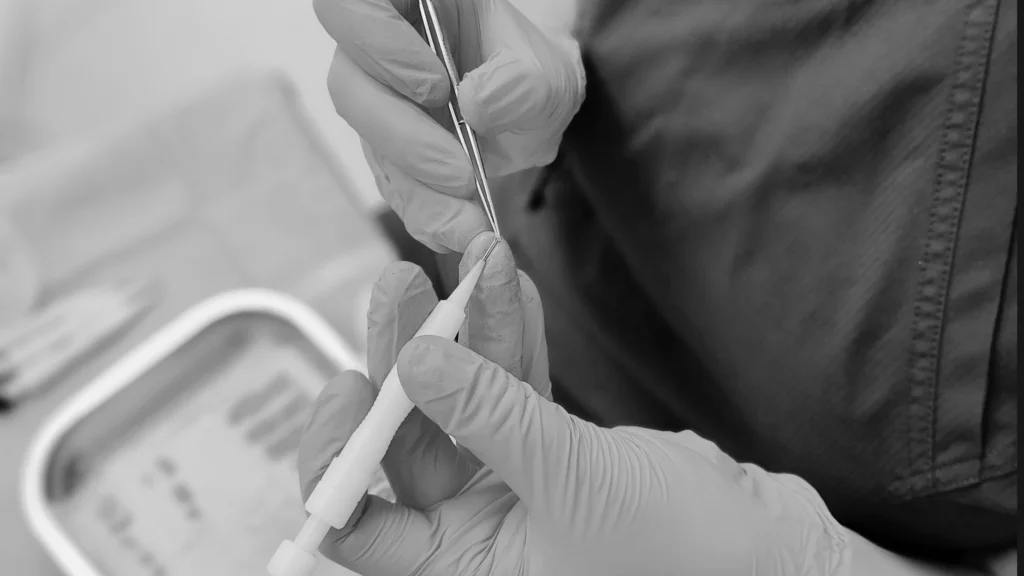
Grafts must be stored under the right conditions. The right temperature and continuous hydration reduce biological stress.
This factor is among the most often underestimated, but it directly affects survival.
Implantation and the naturalness of the result
Implantation is both an art and a medical skill. For a result that looks natural, you need:
- the correct depth
- the right angle
- correct direction
- the right density in each area
In addition, precise implantation also helps survival, because it supports blood supply and reduces trauma.
Direct FUE and graft survival
Direct FUE is considered one of the most advanced hair transplant techniques, because it allows greater control over each graft.
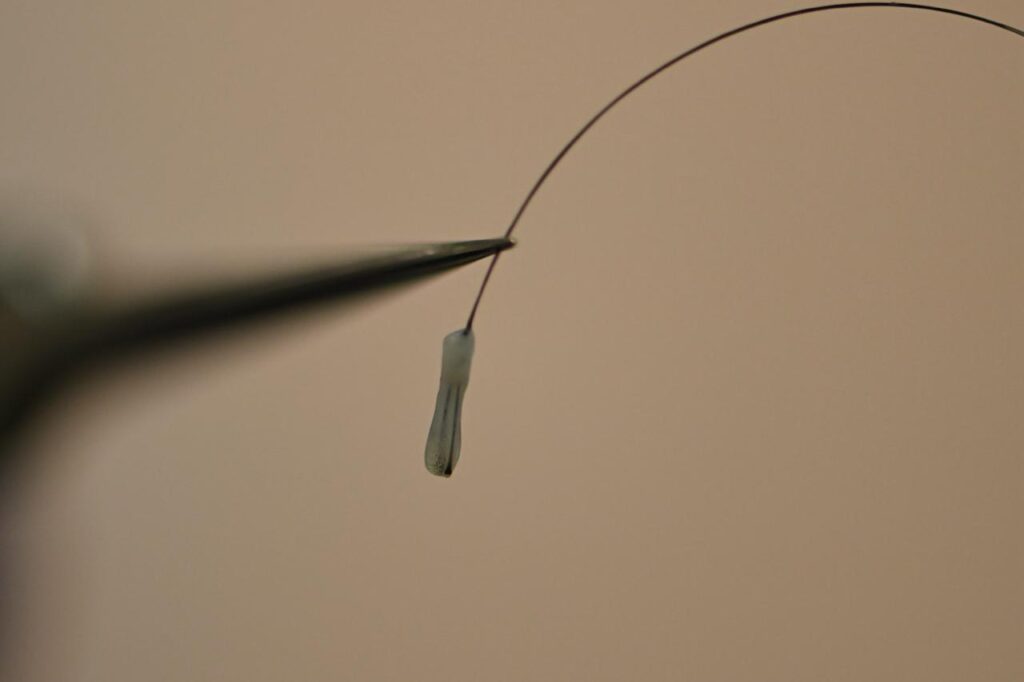
What is Direct FUE?
In Direct FUE, the doctor extracts and implants each follicle individually, using an instrument such as the Choi Implanter Pen, in order to control:
- the angle
- the depth
- the orientation
- the precision of implantation
The advantage is significant: the grafts are less exposed, the risk of damage is reduced and the likelihood of normal growth increases.
Post-operative care and graft survival
The procedure is only the first step. The second is post-operative care, which plays a huge role.
The first days are critical. That is why we guide you with clear instructions so that you can protect the grafts.
What should you do after the transplant?
- Follow the washing protocol correctly
- Do not rub or scratch the recipient area
- Sleep with your head elevated for the first few days
- Avoid exercise and heavy sweating
- Limit smoking and alcohol
- Keep your follow-up appointments
In addition, sun, sea and swimming pools should be avoided until you have medical approval.
How do you choose a clinic that prioritises graft survival?
A clinic that prioritizes graft survival does not promise miracle results. It offers strategy, planning, and realistic expectations.
The right clinic:
- assesses the donor area
- designs the hairline based on the face
- aims for density that looks natural
- uses techniques that protect the grafts
- provides continuous post-operative support
At Clinique de Monsieur, we aim for a 100% natural resultthat is proportionate, undetectable and stable over time.
Conclusion
Hair transplantation is not a numbers game. It is a game of quality, precision and survival. If you want real success, you need to prioritise graft survival, because it determines the density, naturalness and durability of the result.
At Clinique de Monsieur, every case is assessed using strict medical criteria, aiming for a natural, timeless result fully in harmony with your facial features.
Interested in a hair transplant in Athens? Send photos for a free assessment by a specialised doctor.