

Introduction
What are the different forms of alopecia and why is it so important to know them?
Millions of men worldwide experience hair loss. However, what many do not know is that not all forms of hair loss are the same. What someone may think is one form of alopecia may actually be another. Understanding the different types of alopecia is therefore essential for choosing the right treatment.
At Clinique de Monsieur, our goal is for every man to receive the right diagnosis. In addition, with the Direct FUE technique (follicular unit extraction), we have found that by using the Choi implanter, the grafts are placed with great precision, minimal trauma and exceptionally natural results.
In this article, we analyse the main types of alopecia, explain the causes of each form and guide you towards the most suitable treatment options.
What Is Alopecia?
How is alopecia defined medically?
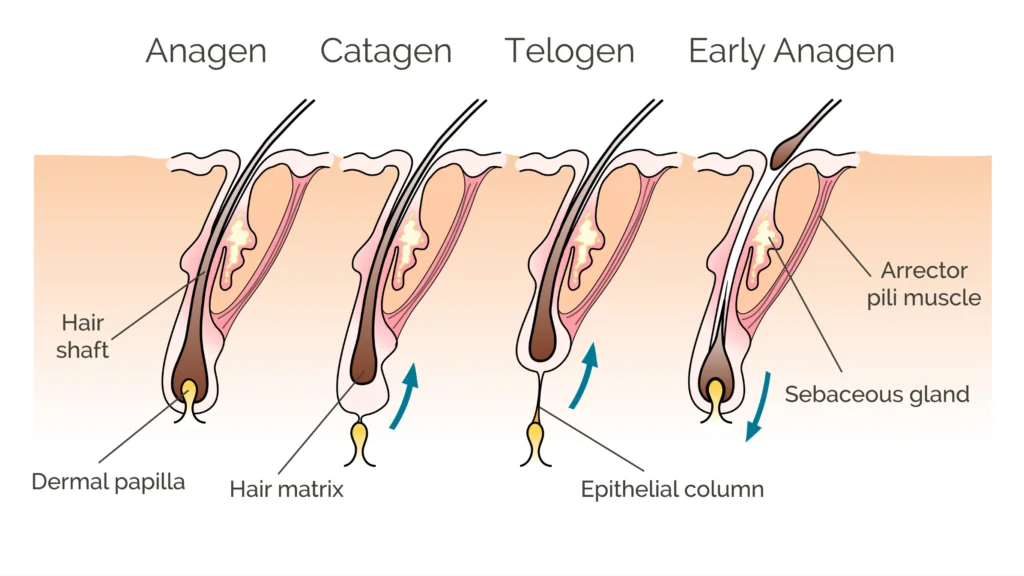
Alopecia is a medical term that describes hair loss from the scalp or other parts of the body. Depending on the cause, some forms are temporary, while others are irreversible.
Why is it important to categorise it correctly?
Each type of alopecia requires different treatment. If it is misdiagnosed, the treatment is likely to fail. Correct identification therefore leads to targeted, effective treatment.
What are the main categories of alopecia?
How is alopecia classified?
There are two main categories:
- Non-scarring alopecia
- Scarring alopecia
This distinction is important, because it determines whether the hair follicles remain functional.
Types of non-scarring alopecia
What is androgenetic alopecia?
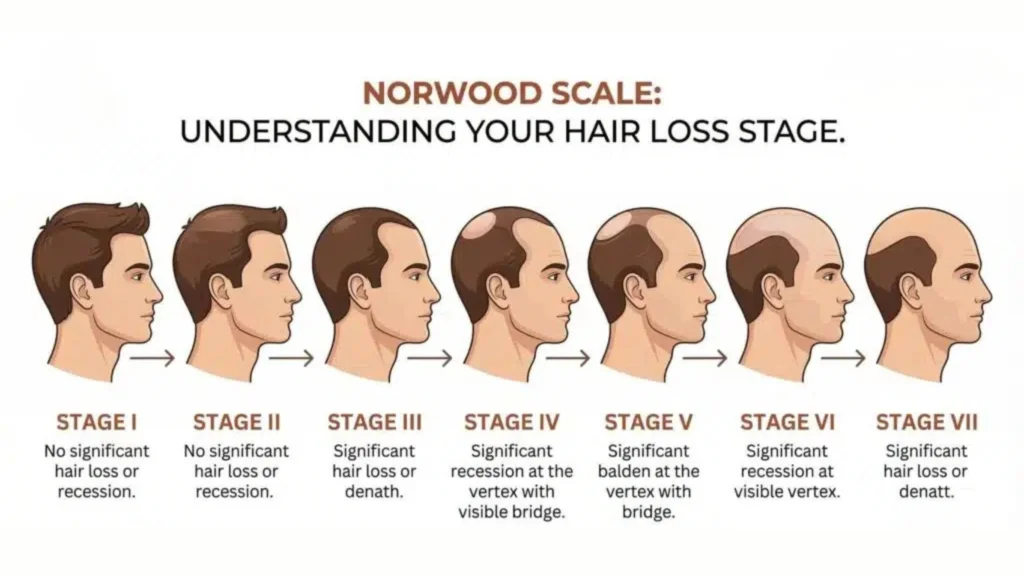
Androgenetic alopecia, also known as male pattern baldness, is the most common form of hair loss in men. It is caused by genetic factors and the effect of DHT.
How does it progress?
It follows a characteristic pattern:
- Receding hairline
- Thinning at the crown
- Reduced density over time
Why is early intervention important?
Early treatment helps preserve active follicles and slow progression.
What is alopecia areata?
Alopecia areata is an autoimmune condition in which the immune system attacks the hair follicles.
What are its characteristics?
- Localised hair loss
- Round or oval hairless patches
- Possible regrowth
Can it be treated?
Yes, in many cases the hair grows back once the immune reaction is brought under control.
What is telogen effluvium?
Telogen effluvium is a temporary condition caused by stress or internal disturbances.
What are the causes?
- Stress
- Illness
- Hormonal changes
- Nutritional deficiencies
How does it appear?
- Diffuse thinning across the whole scalp
- Increased daily hair loss
Is it reversible?
Yes, once the cause is treated, growth returns.
What is anagen effluvium?
Anagen effluvium occurs when hairs in the growth phase suddenly fall out.
What is the cause?
It is usually linked to treatments such as chemotherapy.
How is it different?
The loss is rapid, but regrowth is possible after the treatment ends.
Types of scarring alopecia
What is scarring alopecia?
Scarring alopecia is a permanent form of hair loss, resulting from destruction of hair follicles and replacement with scar tissue.
Why is it more serious?
Destroyed follicles cannot recover. Early diagnosis is therefore critical.
Examples
- Lichen planopilaris
- Frontal fibrosing alopecia
- Central centrifugal cicatricial alopecia
How to identify your type of alopecia
Which symptoms should you look out for?
- Localised or diffuse thinning
- Gradual or sudden onset
If there is redness or irritation, an immediate assessment is needed.
Why should you not self-diagnose?
Many conditions look alike. A medical assessment is essential for accuracy.
How it is diagnosed
What does the examination involve?
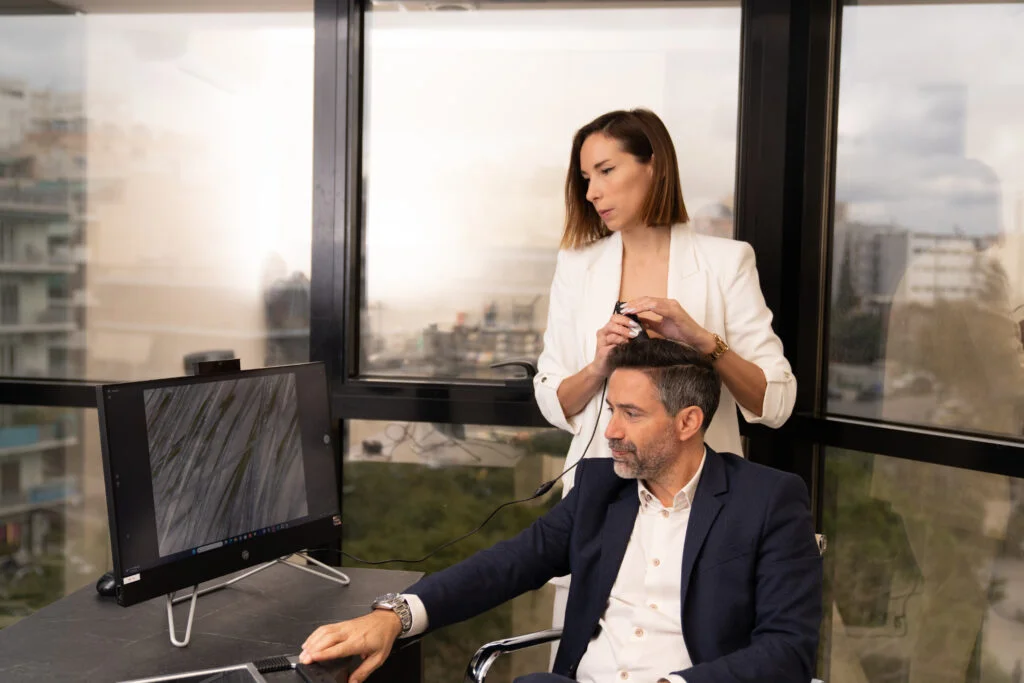
The doctor examines the scalp and the density of the hair.
Which methods are used?
- Clinical examination
- Trichoscopy
- Medical history
- Blood tests
What does the diagnosis show?
- The type of alopecia
- The stage of progression
- The condition of the follicles
- The appropriate treatment
Treatment options
Are all forms the same?
No. Treatment depends on the diagnosis.
Non-surgical treatments
- Anti-DHT medication
- Topical treatments
- Lifestyle changes
Surgical Solution with Direct FUE
In permanent hair loss, a transplant is the most effective solution.
With Direct FUE:
- Healthy follicles are extracted
- The grafts are placed using the Choi implanter
- Placement is precise and minimally invasive
The Clinique de Monsieur approach
What makes it unique?
It combines medical knowledge with aesthetic precision.
How is treatment personalised?
- Detailed diagnosis
- Customized treatment planning
- Donor area management
- Use of Direct FUE
The grafts are placed using the Choi implanter for maximum naturalness.
Conclusion
Why is it important to understand the types of alopecia?
A correct diagnosis determines the success of treatment. Without it, even the most modern techniques may not deliver.
In addition, the best results are achieved with early intervention, proper planning and advanced techniques such as Direct FUE, where the grafts are placed using the Choi implanter, ensuring a natural, long-lasting result.
At Clinique de Monsieur, our goal is to deliver natural, lasting results through personalised treatments and advanced technology.
Are you ready to understand your hair loss condition?
Book your consultation and discover the ideal solution for you.