

Haircut after a hair transplant: when is it safe to get your hair cut?
After a hair transplant, many patients wonder when they can safely go back to their usual style. Although a haircut may seem like a small, unimportant thing, when you have it can affect the results of the transplant.
This is because there is a period immediately after the procedure when the new grafts are extremely sensitive and need careful handling. Understanding this timeframe helps ensure the survival of the grafts.
At Clinique de Monsieur, we stress that post-operative care is just as important as the transplant itself. We also use advanced techniques such as Direct FUE, in which the grafts are placed using the Choi implanter, offering precision, less trauma and a faster recovery.
Post-operative scalp care after a hair transplant
Why does the scalp remain sensitive right after the transplant?
After the procedure, the scalp enters the healing phase. Because the grafts have only just been placed, the area is particularly sensitive.
What symptoms appear after the procedure?
Patients usually experience:
- Both redness in donor and recipient areas
- Mild swelling, especially on the forehead
- Tiny crusts or scabs surrounding each graft
Why is this stage critical before a haircut?
The grafts have not yet settled. Any pressure or friction can dislodge them. So even a simple haircut can affect the final density.
When Can You Safely Get a Haircut After a Hair Transplant
Can I get a haircut in the first week?
No. It is not safe to get a haircut in the first 7 to 10 days. The grafts have not yet settled.
When can I trim the donor area?
The donor area heals faster. You can trim it lightly after
- 2 to 3 weeks
When can I trim the recipient area?
The recipient area needs more time. It is usually safe after
- 4 to 6 weeks
When can I go back to a normal haircut?
You can use clippers after
- 8 to 12 weeks
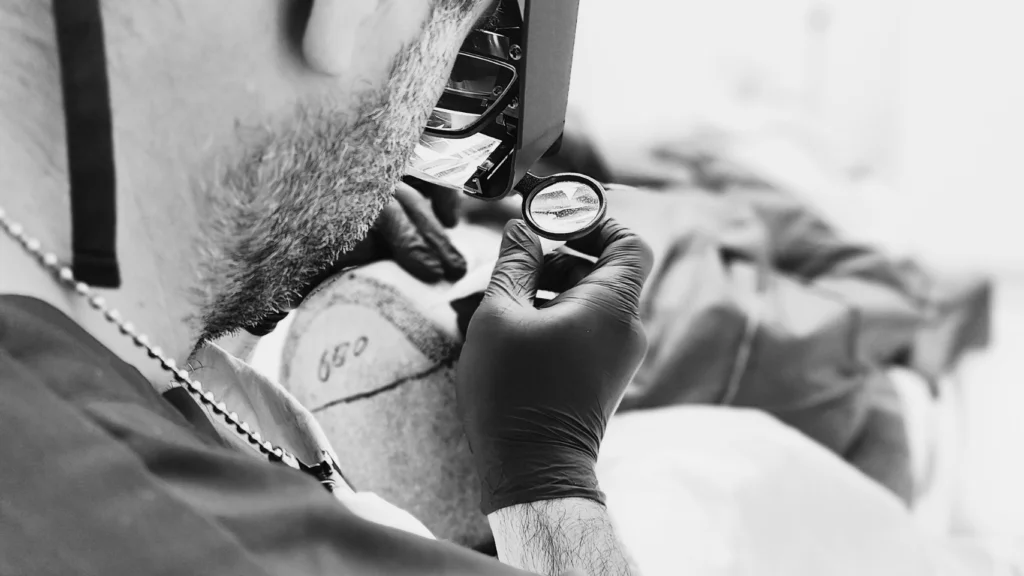
Safe haircut options after a hair transplant.
Which haircut techniques are allowed at first?
At first, gentle techniques are preferred, such as:
- Scissor cut
- Gentle styling without pressure
Which techniques should be avoided?
You should avoid:
- Hair clippers
- Electric shavers
- Shaving with a blade
Why should clippers be avoided?
Clippers cause vibration and pressure that can affect the grafts.
The growth timeline of new hairs and how it relates to haircuts
What happens to the new hairs after the transplant?
After a few weeks, it is normal for the transplanted hairs to fall out. This is called shock loss.
When will new growth begin?
Growth usually begins after 90 to 120 days
How does this affect a haircut?
The new hairs are fine and delicate, so care is needed.
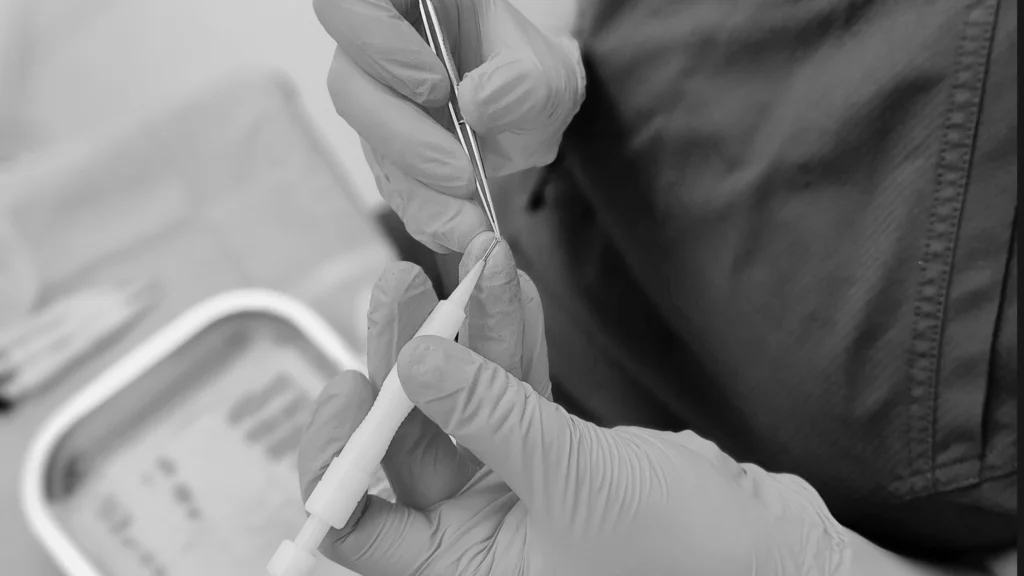
Advantages of Direct FUE for a faster recovery
Why is Direct FUE considered an advanced technique?
It is minimally invasive and offers high precision.
How does Direct FUE improve healing time?
With Direct FUE, the grafts are placed using the Choi implanter, reducing trauma and speeding up healing.
What are the benefits for patients?
- Faster recovery
- A quicker return to grooming
- Decreased discomfort
- Natural result
Common mistakes to avoid
What mistakes do patients often make?
- Getting a haircut too early
- Using clippers
- Pressure on the scalp
Why are they dangerous?
They can cause
- Loss of grafts
- Delays in healing
- A poor aesthetic result
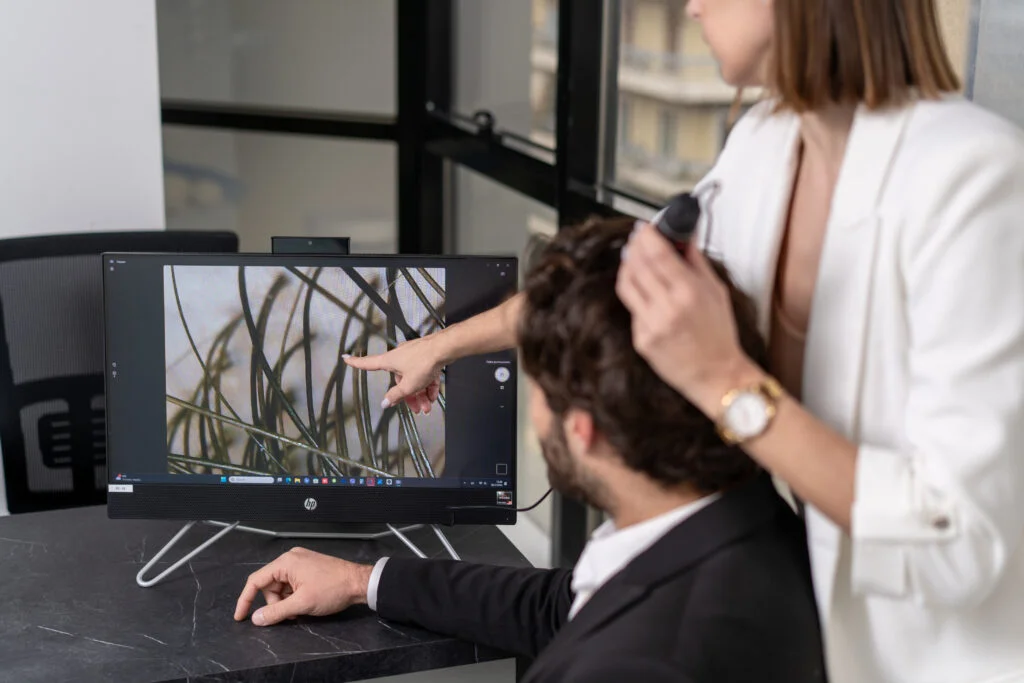
Safe ways to maintain your hair after the transplant
What should I do before getting a haircut?
- Consult your doctor
- Wait for the right time
- Make sure healing is complete
What should I pay attention to?
- Choose an experienced professional
- Avoid aggressive techniques
- Handle the scalp gently
Conclusion
When can I safely get a haircut after a hair transplant?
Most patients can trim the donor area after 2 to 3 weeks, the recipient area after 4 to 6 weeks, and fully return to their normal haircut habits after 2 to 3 months.
Why is correct timing so important?
Because protecting the grafts during the initial healing phase ensures better survival, a faster recovery and optimal final density.
With advanced techniques such as Direct FUE, the grafts are placed using the Choi implanter, ensuring precision, minimal trauma and natural results.
At Clinique de Monsieur, we combine expertise, innovation and personalised care to help patients achieve long-lasting, natural results.
Ready to preserve the result of your transplant?
Book your appointment today and receive a personalised recovery plan tailored to your needs and lifestyle with Clinique De Monsieur.