

In hair transplantation there is one basic principle that never changes: safety and the final result depend on who performs the critical stages of the procedure. So when we talk about success, it is not enough to know that a transplant was carried out; we need to know who carried it out.
In our approach, hair transplantation is treated as a high-precision medical procedure, where hygiene, technique, correct management of the donor area and attention to detail determine the final result. When critical stages are performed by non-medical staff, the so-called hair transplant technicians, the risk increases both for your health and for how natural the result looks.
The real question
The real question is not whether a clinic performs hair transplants, but who performs the critical stages of the procedure.
In this article, we explain who hair transplant technicians are, why hair transplantation is a medical act, what risks arise when key steps are delegated to non-medical personnel, and how you can recognize a safe, medically responsible clinic.
For international safety standards, you can consult the World Health Organization and the American Academy of Dermatology, both of which emphasize the importance of medical execution in invasive procedures.
Who are hair transplant technicians?
Are they doctors or non-medical staff?
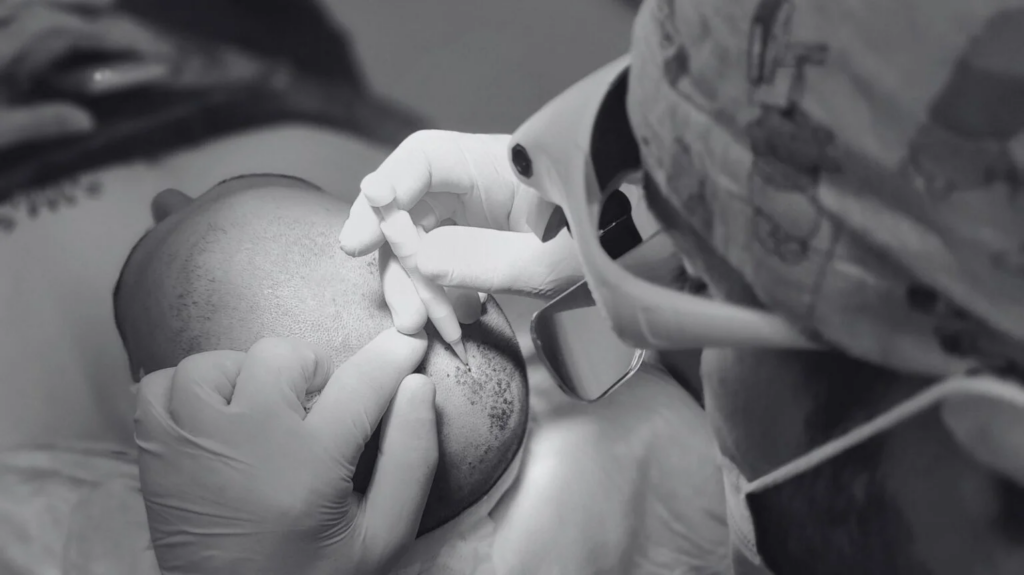
Many patients wonder who actually performs the hair transplant. In some high-volume clinics, important parts of the procedure are carried out by technicians rather than a specialized physician.
Hair transplant technicians:
- are not plastic surgeons or dermatologists
- do not have full medical education
- often perform graft extraction and graft placement
- cannot manage medical complications
- follow standardized techniques without personalization
According to the International Society of Hair Restoration Surgery, hair transplantation should be performed by a specialised doctor for reasons of safety and a natural result.
Even if the cost looks lower, the risk to your health and to the outcome increases significantly.
Why hair transplantation is a medical procedure
Hair transplantation is not a simple aesthetic procedure. It is a medical procedure that requires strict protocols, a sterile environment and specialised knowledge. The body reacts to poor technique as it would to any surgical intervention.
A medical approach protects the patient and strengthens the result because it:
- reduces the risk of infection
- controls bleeding
- supports normal graft growth
Can it be done without medical diagnosis?
No. Every transplant must be preceded by an assessment of the cause of hair loss, the capacity of the donor area and the future progression of thinning.
A specialized doctor:
- diagnoses the type of hair loss
- designs a natural hairline using medical and aesthetic criteria
- protects the donor area
- prevents complications
- provides medical follow-up
Hair transplantation is a treatment and requires medical accountability.

The main risks when a transplant is performed by technicians
Health risks
When critical stages are performed by non-medical staff, the likelihood of complications increases, such as:
How the aesthetic result is affected
Naturalness depends on precision. When the procedure is performed by non-specialised staff, the following are often seen:
- unnatural hairline
- wrong angle and direction of hair growth
- low graft survival
- uneven density
- irreversible outcome
Long-term consequences for the donor area
The donor area is a limited and valuable resource. When it is not protected properly:
- reduced ability for a future transplant
- permanent thinning
- distortion of the natural appearance
Common consequences include over-harvesting, permanent thinning of the donor area, the inability to have a second transplant and an uneven look.
How to recognize a safe clinic
Check:
- whether the transplant is performed by a certified doctor
- whether a full medical diagnosis is done
- whether a personalized treatment plan is designed
- whether the process is transparent
- whether medical follow-up is provided
Why medical expertise makes the difference
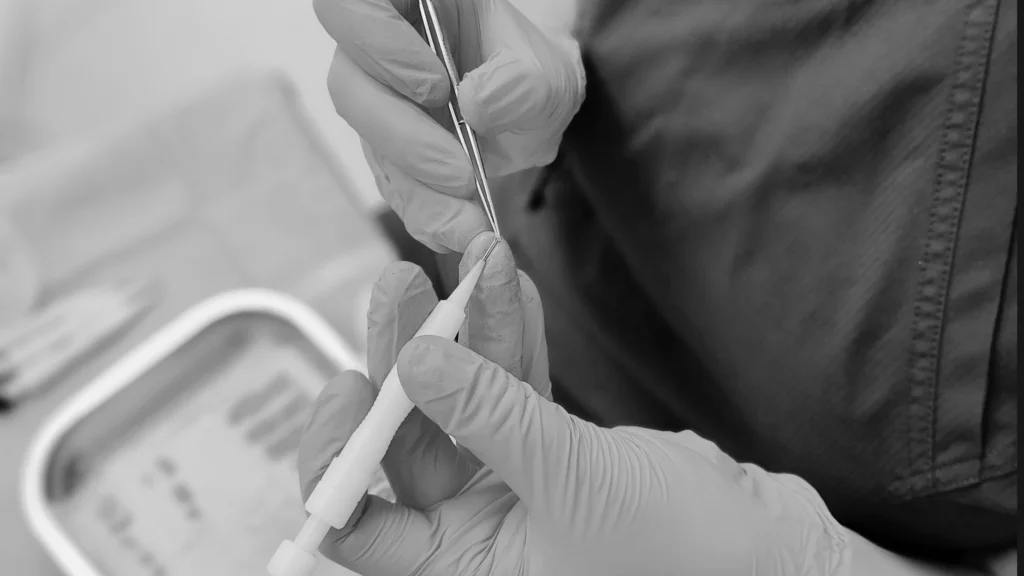
The success of a hair transplant becomes clear months later. A specialized doctor:
- designs a hairline that evolves naturally
- protects the donor area
- ensures high graft survival
- creates natural density
- plans long-term restoration
Conclusion
Hair transplant technicians may reduce costs, but they increase the risk to your health, your donor area and the final result. A hair transplant is a medical procedure and should be performed by a specialised doctor.
Before going ahead, ask who performs the transplant, whether a medical diagnosis is carried out and whether the donor area is protected. The right choice today determines the result for a lifetime.
At Clinique de Monsieur, the plan for every case is based on scientific analysis and aesthetic balance, with the goal of a natural result that lasts over time.
Hair transplant in Athens? Send photos for a free assessment by a doctor.