

Introduction
What exactly does hair transplant density mean, and why does it play such a critical role in hair restoration results?
Hair transplant density is one of the most important factors in determining how natural and full your hair will look after a procedure. While many patients focus on the number of grafts, density goes far beyond simple counting. Instead, it reflects how effectively those grafts are distributed across the scalp.
At Clinique de Monsieur, we approach hair transplant density as a balance between medical precision and aesthetic expertise. Moreover, with advanced techniques such as Direct FUE, grafts are being implanted with the use of Choi implanter, allowing for exceptional control and natural outcomes.
In this article, we will explain what hair transplant density really means, how it is calculated, and how modern techniques optimize results.
What Is Hair Transplant Density?
Is hair transplant density just about graft numbers?
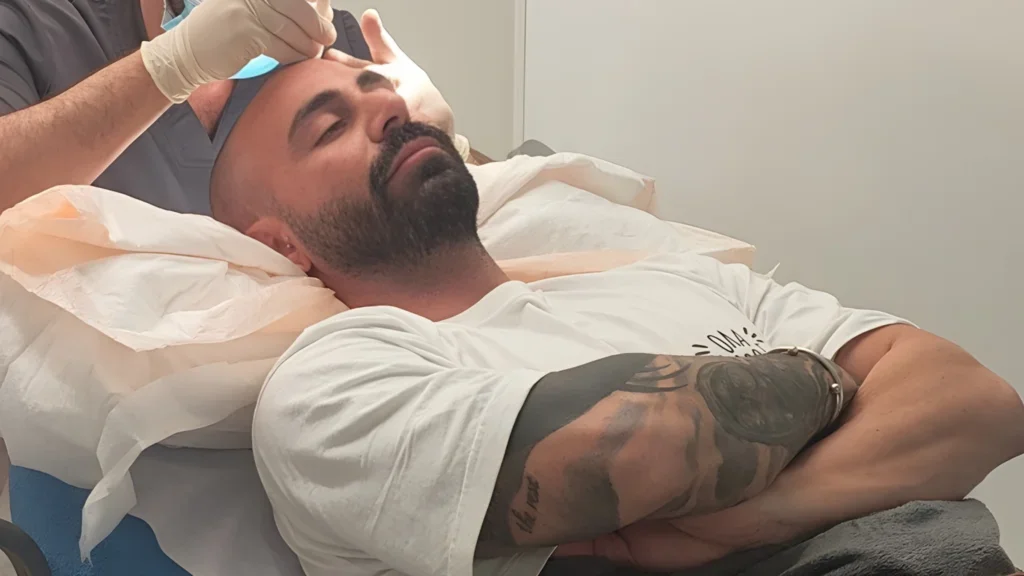
Hair transplant density is a critical element of a successful restoration procedure. The actual number of grafts can vary significantly from surgeon to surgeon, and there is no specific number that defines “density”. It is often misinterpreted as the number of grafts per unit area.
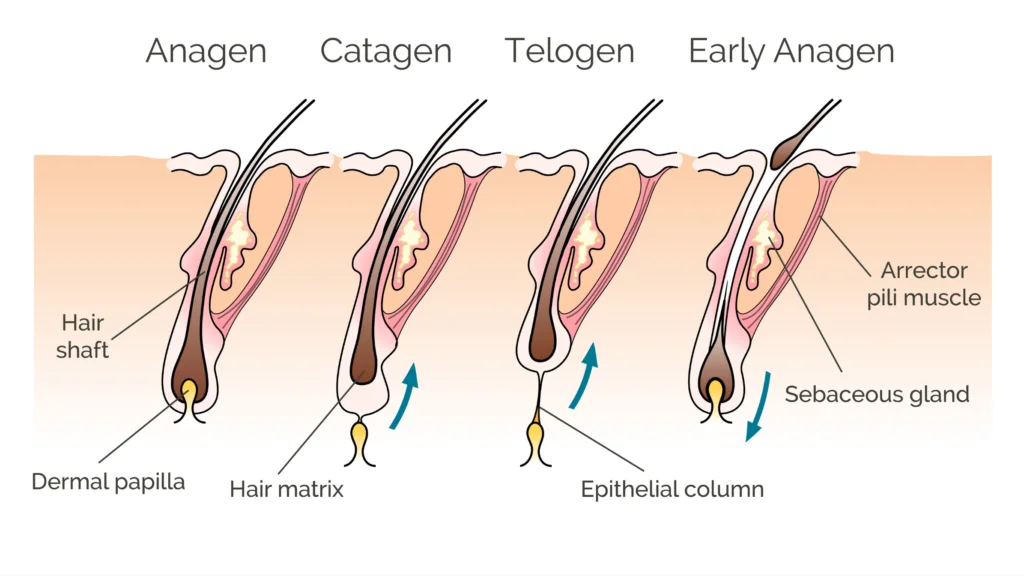
Hair transplant density can refer to the amount of hair in follicular units or individual hairs planted into a given space. Hair transplant density is the most important factor when determining the cosmetic results of a hair transplant. Simply put, the greater the hair transplant density, the fuller the area will appear post-surgery. This means the closer together the hair is spaced, the less visible the scalp will appear.
Why is density often misunderstood?
Many patients believe they need to maximise the number of grafts to achieve the best result. However, this is not always true, and there are significant limitations.
Why Is Hair Transplant Density So Important?
How does density affect the final appearance?
Hair transplant density directly determines how full the hair appears after surgery. For example, higher density reduces scalp visibility, improves visual thickness, and enhances overall aesthetic results.
A general rule is to place 30 to 40 grafts per square centimetre in cases of moderate hair loss. However, other factors beyond the numbers must also be taken into account.
Does more density always mean better results?
If too many grafts are placed in one area, problems can arise such as reduced blood supply and insufficient growth, or even an unnatural result. In addition, excessive placement can lead to scarring and a longer recovery time.
How Many Grafts Are Needed for Ideal Density?
Is there a specific number?
A general guide is 30 to 40 grafts per square centimetre for moderate hair loss. However, this number is not the same for everyone.
Which factors affect the number?
For example, if a patient has fine or weak hair, high density may not be achievable. Likewise, larger thinning areas require a different distribution strategy.
Specialised clinics such as Clinique de Monsieur assess all of these factors before recommending treatment.
How does Direct FUE improve density?
What is Direct FUE?
As technology has evolved, Direct FUE has become one of the most modern techniques.
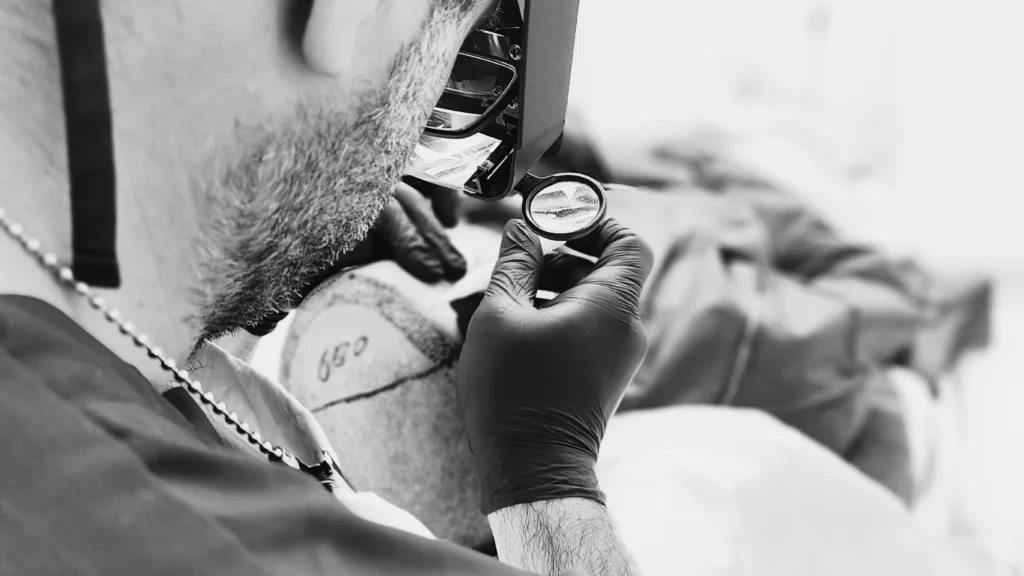
This method uses special instruments for the direct extraction and placement of the grafts. The grafts are placed using the Choi implanter, allowing precise placement without unnecessary handling.
What are the advantages?
Direct FUE offers significant benefits such as greater precision, reduced trauma, better graft survival and a faster recovery.
What happens if too many grafts are used?
Is it right to maximise the number?
Not always. Excessive density can cause problems.
Why is balance important?
Overloading an area can lead to reduced blood supply, low graft survival and an unnatural result.
How to choose a hair transplant clinic?
What should you ask?
It is important to ask about the density strategy each clinic follows.
Why do the approaches differ?
Some clinics focus on the number of grafts, while others focus on a natural result. The second approach is preferable.
The Clinique de Monsieur approach
What sets us apart?
At Clinique de Monsieur, we treat density as a combination of science and art.
How is treatment personalised?
The process includes a personalised consultation, advanced diagnosis, natural hairline design and Direct FUE using the Choi implanter.
Why is personalisation important?
Every patient is unique. Personalisation therefore ensures natural, long-lasting results.
Conclusion
So what does density really mean in a hair transplant?
It is not simply about the number of grafts, but about how they are strategically placed to create a natural, aesthetically flawless result. The right density depends on many factors, such as the quality of the donor area, the characteristics of the hair and the overall extent of the thinning.
In addition, pursuing maximum density is not always the right approach. Instead, balance, precision and correct distribution of the grafts are what ensure long-lasting, natural results.
At Clinique de Monsieur, we use the Direct FUE technique, where the grafts are placed using the Choi implanter, ensuring complete control, high survival and a natural appearance.
If you are considering a hair transplant, we invite you to contact Clinique De Monsieur and schedule your own personalised consultation.