

Introduction
How soon is it safe to exercise after a hair transplant?
After a hair transplant, most patients want to get back to their routine as quickly as possible, including exercise. However, timing is crucial. When can you exercise safely without putting your results at risk?
The answer depends on how well your scalp heals in the first days after the procedure. Because the newly placed grafts are fragile, exercising too early can affect them negatively. That is why understanding the recovery timeline is essential.
At Clinique de Monsieur, we stress that post-operative care is just as important as the procedure itself. In addition, with advanced techniques such as Direct FUE, the grafts are placed using the Choi implanter, offering precision, minimal trauma and a faster recovery.
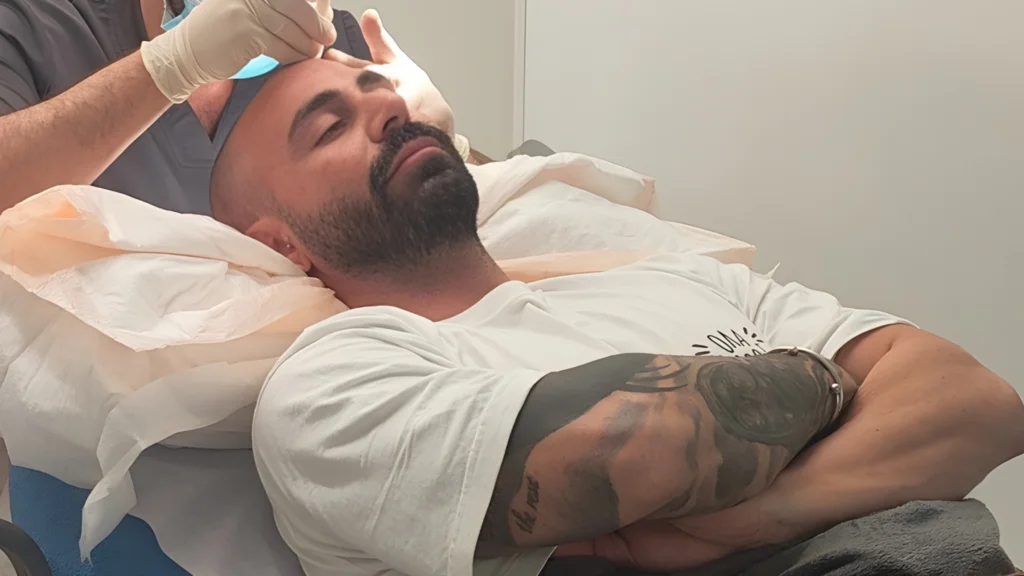
What Happens to Your Scalp After Hair Transplantation?
Why Does the Scalp Become Sensitive Immediately After Surgery?
Immediately after the procedure, the scalp enters the healing phase. Because the grafts have only just been placed, the tissue in the area is particularly sensitive.
What symptoms should I expect?
Patients usually experience:
- Increased redness in both the donor and the recipient area
- Mild swelling, especially on the forehead
- Tiny crusts or scabs surrounding each graft
How does exercise affect this healing phase?
Exercise raises heart rate and blood pressure. As a result, blood flow to the scalp increases and sweating occurs. This can make the grafts unstable and slow down healing.
When can I go back to the gym after a hair transplant?
Can I exercise in the first few days?
No, you should not do any form of exercise in the first 3 days. The grafts have not yet settled.
When can I start light activity?
You can start light activity, such as walking, after:
- 3 to 5 days
This level of activity does not cause significant increases in blood pressure or heavy sweating.
When can I return to moderate exercise?
You can return to moderate exercise, such as a light gym session, after:
- 7 to 10 days
Avoid any pressure or strain on the scalp.
Is intense exercise safe?
Intense exercise, weights and sports should be postponed until:
- 2 to 3 weeks
By then, the grafts have settled sufficiently.
Types of Exercises and Their Effects on Recovery
Which activities are safe at first?
In the initial recovery phase, the following are allowed:
- Walking
- Light stretching
- Gentle movement
Which activities should be avoided?
You should avoid
- Running
- Weightlifting
- Intense training
- Swimming
Why is swimming risky?
Because of bacteria and chemicals in the water, the risk of infection and irritation increases.
Why is sweating an important factor after the procedure?
How does sweating affect recovery?
Sweating can have a negative effect on healing by:
- Irritating the skin
- Softening the scabs prematurely
- Creating an environment for bacteria
Can sweating damage the grafts?
Yes. Combined with friction or pressure, it reduces the stability of the grafts.
How can I reduce the risk?
Avoid heat, exercise in a cool environment and follow the medical instructions.
Advantages of Direct FUE for recovery and returning to exercise
Why is Direct FUE preferred?
Direct FUE is minimally invasive and offers high precision.
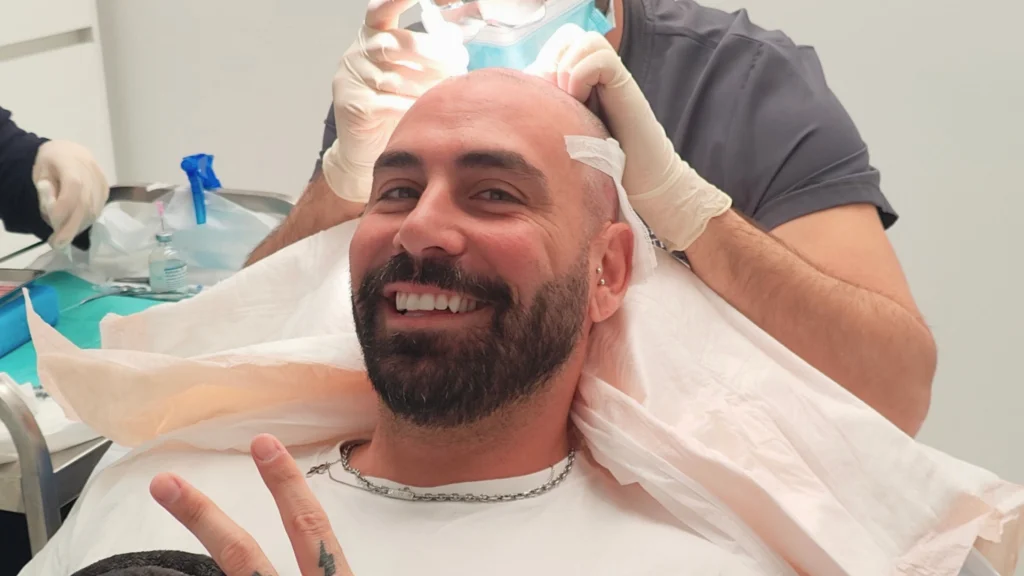
How does it help with a faster recovery?
Because grafts are being implanted with the use of Choi implanter:
- Trauma is reduced
- Precision increases
- Recovery time is reduced
What are the benefits?
- A faster return to exercise
- Decreased discomfort
- Higher graft survival
Common Errors That Delay Return to Exercise
Examples Include:
- Returning to exercise too early
- Ignoring medical advice
- Exposing the scalp to heat or sweat
- Using tight headgear
Why they are risky:
- Loss of grafts
- Delays in healing
- Worse results
How to return to the gym safely?
What is the right strategy?
A gradual return to activity.
What should I do?
- Start gently
- Keep an eye on your scalp
- Gradually increase intensity
Precautions:
- Cleanliness
- Avoiding contact
- Hydration
- Following instructions
Why is a gradual return important?
It avoids pressure on the grafts and leads to better long-term results.

When am I fully recovered?
How Long Does Complete Recovery Take?
Full recovery takes time.
Timeline:
- Week 1: initial healing
- Week 2: stability
- 1 month: full stabilisation
- 3 to 12 months: final result
Conclusion
When can I exercise safely?
Light exercise in a few days, moderate exercise in one week and intense exercise in 2 to 3 weeks.
Why does timing matter?
Because it protects the grafts and ensures better results.
With Direct FUE, the grafts are placed using the Choi implanter, ensuring precision and a natural result.
At Clinique de Monsieur we offer personalised solutions for natural, long-lasting results.
Ready to return safely to your daily routine
Book your appointment today with Clinique De Monsieur.